Happy Holidays! Just wanted to let everyone know that I’m offering a new virtual class through Ahimsa Yoga Studio on Fridays from 10-11 am central.
The class is called Gentle with Pranayama and Yoga Nidra, and it will employ gentle movement and breathwork to open the physical and energetic bodies, followed by an extended yoga nidra.
Yoga nidra is a guided meditation, usually performed lying down, which brings the yogi into a state of non sleep deep rest. It is a practical way to reduce anxiety, release unnecessary stress, and experience the subtler aspects of yoga. Here’s a post with some more info and resources.
Also, next Wednesday, 12/28/22, will be my last day teaching Vinyasa Flow at 8 am. All other classes will remain unchanged, and you can always see my current schedule on the Classes page.
I hope you are having a great holiday season and that 2023 is full of growth and awakening. Om Shanti.
Happy to announce my short story, “The Hunger of Ned Greaves,” has been published in the fall issue of J Journal. Thanks to the editors, Jeffrey Heiman and Adam Berlin, for including my work in this excellent edition. Follow the link below to read it now and/or order a hard copy from the J Journal website.
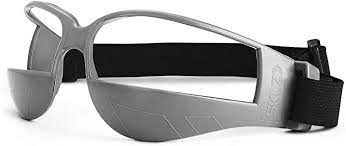
When I was in 8th grade, my dad handed me a pair of these.
Well not these, exactly. Mine were way weirder looking. Mine were more like a plastic platform that sat on the bridge of my nose and strapped around the back of my head–sort of a cross between a piece of hospital equipment and a push up bra for an enormous Barbie doll.
What are they? Oh. They’re ball-handling blinders. They train you to keep your head up when you’re dribbling so you can drop sweet dimes.
I wish I could show you the pair I had. I couldn’t even find photos of them on the internet, which makes me wonder if they actually existed. 🤔
They worked though. No doubt. Everytime I’d put the ball between my legs or behind my back, I would try to peek down, but when I had the goggles on, I couldn’t see the ball. I couldn’t see anything, and it helped me break the habit.
Most of us use all sorts of devices to help create boundaries for our behaviors–alarm clocks to limit our sleep, apps that lock us off the internet, fitness classes that charge us even if we don’t show.
We also have apparatuses to boost certain types of behavior–watches that send us digital stickers 🙌 when hit our steps, delicious cookies as a reward for getting through a rough draft, visiting this website to find some inspiration to unroll your mat.
You might say these technologies are as old as the carrot and the stick.
A lot of these methods work, but one limitation of even the best of them is that they usually only work in one specific arena and don’t do much to help us develop the ability to direct our energies in a general.
This means that even if we can rein in a particular behavior here or engender a new positive habit there, we don’t get much help with unexpected distractions.
In order to live a life that’s congruent with our aspirations, we need to develop an internal, holistic approach to stay motivated and reorient us when we start to stray off course. There are probably a number of ways to go about this, but one effective tool we can adopt from the yoga tradition is a sankalpa.
According to Yogapedia, the word sankalpa “comes from the Sanskrit roots san, meaning ‘a connection with the highest truth,” and kalpa, meaning ‘vow.'”1A sankalpa then is a vow to stay connected to the highest truth.
Since sankalpas work from the inside out, we’ll start with the deepest part first.
Sometimes called your bhavana sankalpa, this part of your sankalpa is sometimes translated as your heart’s desire and can be thought of as an affirmation of your true nature.
Because you always are your true nature (even when you forget or can’t feel it) you formulate your bhavana sankalpa as a positive statement in the present tense, eg. “I am pure awareness,” “I am healthy, whole, and free,” or “I am at one with all beings everywhere.”
To find a statement you can connect with, you can begin by probing some of your existing desires. For example, you may have a goal to get promoted at your job, but to discover your bhavana sankalpa, you might question what achieving that goal will satisfy at a deeper level.
Is it acceptance? Empowerment? Security? Feeling valued? Maybe it is all of these things, so when you formulate your bhavana sankalpa, you might use language that includes aspects of your true nature that express that ultimate longing, eg. “I am a creative force, inextricably woven into the fabric universe, at one will all beings everywhere.”
What you come up with doesn’t have to be poetic or lofty, and you should try not to put too much pressure on yourself to lock down something perfect because it will refine itself over time. The important thing is that the words you choose allow you to tap into the felt experience of this inner truth. This is one reason why you might want to let your bhavana sankalpa take shape during savasana, yoga nidra, or other times when you’re in a meditative state and have more access to the wider dimensions of your being.
The second part of a sankalpa can be thought of as an intention. Your intention is something you use in the shorter term to bring you into harmony or manifest specific actions.
If you work with your sankalpa before your yoga practice, for example, you might consider what you need from that particular practice and set an intention to use the practice to bring yourself into balance. You could set an intention to use the practice to find some grounding, explore some type of pain or discomfort, stoke your inner fire, or work with a particular emotion.
You might likewise use your intention to help you fire off that email you’ve been avoiding or call a friend you haven’t talked to in awhile. You could also set an intention to attend to a particular creative project, professional strategy, or some aspect of your personal or home life.
As with your heart’s desire, it’s important to formulate your intentions in positive, declarative statements of fact, eg. “I meditate every afternoon,” “I paint when the appointed time arises,” “I am patient with my kids and provide a sturdy container for their emotions,” or “I listen to what my coworkers have to say and adjust my thinking and actions according to what feels true.”
By structuring your intentions as affirmations and then following through with them, they become welded to an embodied state, which empowers them. This does not happen, however, if you start your intention with words like “I will…” or “I hope to…” or “I want…” Statements like these have the unfortunate effect of reminding us that we are not currently who we want to be and don’t generate that internal momentum.
You may find it helpful to employ your sankalpa as part of a writing process. I write mine down at the end of my journaling practice each morning. For me, it’s a free flowing practice of writing out affirmations of my heart’s desire and intentions for the day. Some statements appear everyday while others come and go. I find that writing it down in this way brings more focused attention to the process, which helps to generate enthusiasm, a positive mindset, and great determination.
Working with a sankalpa is like planting a seed deep in your being. If you nurture it with the practice of gratitude and a feeling of devotion on a regular basis, it will grow and spontaneously blossom throughout your day.
You will even find that when afflictive states appear and start to pull you away from actions that support your values, your sankalpa will arise as an embodied state that will propel you back to your chosen course.
This is radically different from hearing your chastising superego telling you things like, “don’t do that,” or “you should really be doing this instead,” which usually doesn’t alter our behavior and only heaps shame upon us.
The conscious use of external tools that curtail certain behaviors and support others will always have a place, but to bring our thoughts, words, and deeds into harmony with our deepest calling, we cannot exclusively rely on devices, rewards, and blinders to alter our tendencies in a piecemeal fashion.
Instead we need to practice summoning again and again the felt experience of our higher nature so that we learn to flow, more and more, along the vector of our awakening.
Thanks for stopping by. If you want to join me for a practice, I teach virtual vinyasa yoga on Thursdays at 8 am central through Ahimsa Yoga Studio. You can sign up here. I also have a growing library of free, on demand classes on YouTube.
If you want to get the blog by email. You can sign up here. 👇
Processing…
Success! You're on the list.
Whoops! There was an error and we couldn't process your subscription. Please reload the page and try again.
A little stress is necessary. Stress is the body’s way of preparing us to tackle challenges. But stress is only healthy if it lasts a relatively short amount of time, say from the time it takes to prepare a presentation until the presentation is over, or from the moments leading up to a difficult conversation with with a loved one until the two of you are hugging it out in your favorite dress-up clothes.
If stress goes on too long, we call it chronic. Our bodies and minds get stuck in a state of arousal, which is unsurprisingly exhausting and can have a number of deleterious effects on our health and well being.
For many of us, this was a problem before the pandemic. Trying to live up to the bizarre cultural injunction to remain continuously productive and in active management of our lives from the moment we open our eyes until we go to sleep can do that to a person, and things have clearly become trickier.
Even if you can’t feel it directly, you might notice it as an increase in irritability or anxiety. Maybe you can’t fall asleep, or when you wake up in the middle of the night, you find yourself on the couch, dispatching a tub of ice cream as you binge watch adult cartoons.
I’ve been through all of this stuff, and while I’m not trying to claim I’ve got everything figured out, one of the most helpful tools on all these fronts has been the development of a daily practice of yoga nidra.
Yoga nidra (yogic sleep) and its Westernized twin, iRest meditation, are relaxation practices where you sit or lie down for anywhere from a few minutes to over an hour and allow yourself to be guided through a series of very simple awareness exercises.
The practice works by drawing your attention away from the repetitive, obsessive, and useless thinking that keeps you wound up to the felt experience of your body, breath, and awareness, which generates a profound state of ease, well being, and can become a gateway to self inquiry and meditative insight. Although the word sleep is in the name, the idea is not to actually lose consciousness but to learn how to remain attentive as you enter a state between wakefulness and sleep where your mind starts to open up.
Yoga nidra doesn’t require any special skills and can be done whenever it fits into your schedule. I do my practice when I put my two-year old down for a nap, which helps me reset and recharge for the afternoon of parenting, cooking, and anything else I need to handle before bedtime, but I’ve also used yoga nidra at night to help me fall asleep (or go back to sleep if I wake up) or at other times when I feel overwhelmed.
One of the coolest things about this practice is that if done regularly over an extended period of time, you’ll learn how access this defocused state of presence without needing a recording, so that you can spontaneously work with your attention to defuse escalating arousal states and find pockets of rest when you need them.
So without further adieu, here are a few practices I like:
The first is a 20-minute practice led by the founder of iRest, Richard Miller. He studied yoga nidra in a traditional context and then developed iRest to serve a Western audience. I like the iRest practices, and they might be particularly good for those of you who feel that the yogic trappings are too woo woo or conflict with your worldview or religious beliefs.
This next practice from Amrit Yoga is just under 40 minutes and is more traditional. I don’t know Amrit Yoga, but this practice is freaking lovely.
I’ve even recorded a couple myself.
If none of these are to your liking, keep looking. Sometimes it takes awhile to find the right length, format, teacher, etc. Fortunately there are lots of options available on platforms like YouTube and SoundCloud at a zero-dollar cost, so you can easily shop around.
If you want to learn more about yoga nidra, there are two Audible books I can recommend.
The second audiobook is iRest: Integrative Restoration Yoga Nidra for Deep Relaxation, by Molly Birkholm. This book has a number of longer practices and dives deep into the philosophical roots of yoga nidra as well as some of the science behind it. Like Richard Miller’s book, it also breaks down the practice into its fundamental parts, but it goes further in exploring some of the therapeutic uses, including working with insomnia, stress, chronic pain, PTSD, etc. I use the practices in this audiobook frequently and like the way they are organized.
I’d like to add the disclaimer here that I have no current or former affiliation with any of these people or organizations except as a consumer. My intention is that these practices might be of service to you, and if they aren’t, I hope you found some insight, encouragement, or enjoyment from your time here today. I appreciate you spending it with me. 🙏 🕉
I teach a live virtual vinyasa flow class on Thursdays at 8 am central. You can sign up here 👉 Ahimsa Yoga Studios. I also have a growing library of recorded practices on my YouTube channel.
Want the blog by email? Enter your address below and click the blue button.
Processing…
Success! You're on the list.
Whoops! There was an error and we couldn't process your subscription. Please reload the page and try again.
Hey everybody. 👋 I made a new video. This one is a 75-minute, vinyasa-style class at the wall with a focus on backbending. It also includes a fun and rather tricky transition from ustrasana (camel pose) to urdhva dhanurasana (upward bow).
The prep work for this transition includes a number of backbending variations that will help to open the chest, strengthen the legs, and work with your overhead shoulder mobility. The real benefit lies in this work (and the pranayama at the end of class 😉), so don’t worry if the transition feels out of reach for now, and if it’s easy for you, that’s great, too. 🙌 Either way, go slowly and stay with what feels right for your body moment by moment.
If you’re looking for a live led class, you can join me on Thursday mornings at 8 am central. Click here 👉 Ahimsa Yoga Studios to sign up.
Thanks for checking out the site today and the video if you’re so inclined. You can stay up with new yoga classes by subscribing to my YouTube channel or by signing up to get the blog posts by email. 👇
Processing…
Success! You're on the list.
Whoops! There was an error and we couldn't process your subscription. Please reload the page and try again.
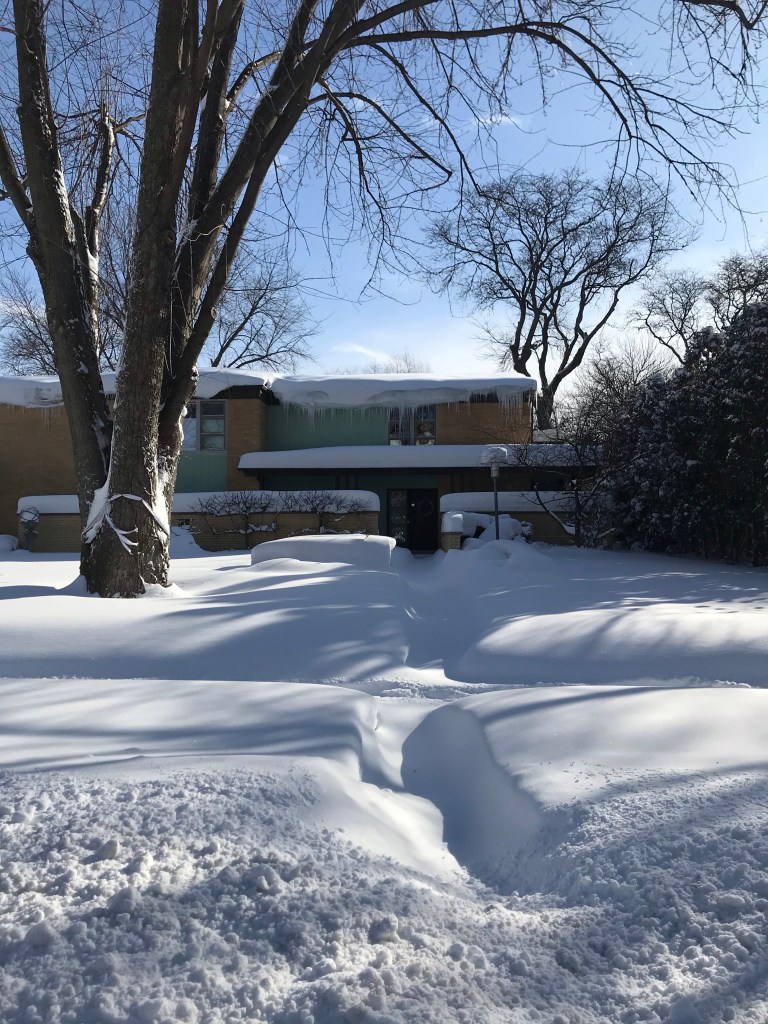
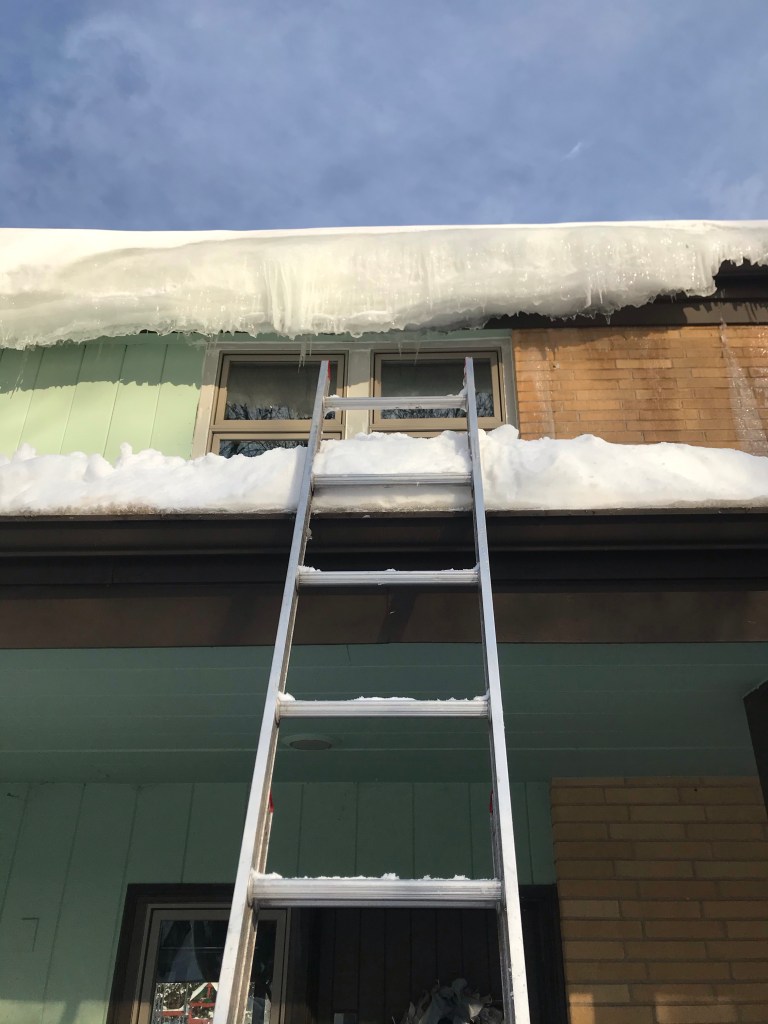
There’s over two feet of snow on our roof, and it’s starting to melt. Giant cornices are forming over the gutters, and icicles are growing like prison bars over the windows.
They are starting to leak, the windows, and drips are falling ominously from the door frames, making the house feel a little like the Titanic. So while Nana (our two-year old) was taking her nap this afternoon, I shoved the monitor in my pocket and went up on the roof to try and break up the ice flow.
For the first 20 minutes or so, I pretended I was Superman, slowly destroying the Fortress of Solitude, but as I continued to work, I came face to face with the unavoidable truth that I was much more like Clark Griswold putting up his Christmas lights.
Around that time, I realized that this was obviously a blog post, so I snapped a selfie.
That’s exertion on my face, folks.
I felt self-conscious and a little ridiculous to be curating my experience, but then I encountered something unexpected. Just thinking about the blog triggered the practice of mindfulness.
So there I was, breaking up the ice and saying to myself, “breaking up the ice,” and then watching the next thought come. “Worried Nana will wake up from the noise.” Then the next thought, “Don’t fall, moron.”
After a bit, I’d fall into forgetting and start identifying with the thoughts again, but then I’d think about the blog and sure enough, the mindfulness would restart, and I’d be labeling: “Judging. Enjoying. Calculating. Seeking approval. Having fun.”
My tools
When I first created this website, I didn’t really think of it as part of my practice. I just thought it would be an entertaining way to extend my teaching and talk about the places where my life and my yoga practice intersect. I quickly came to realize however that it would involve a lot of svadhyaya (self study) and vichara (inquiry). Now today I discovered that thinking about the blog can trigger states of pratyahara (turning inward) and dharnana (concentration).
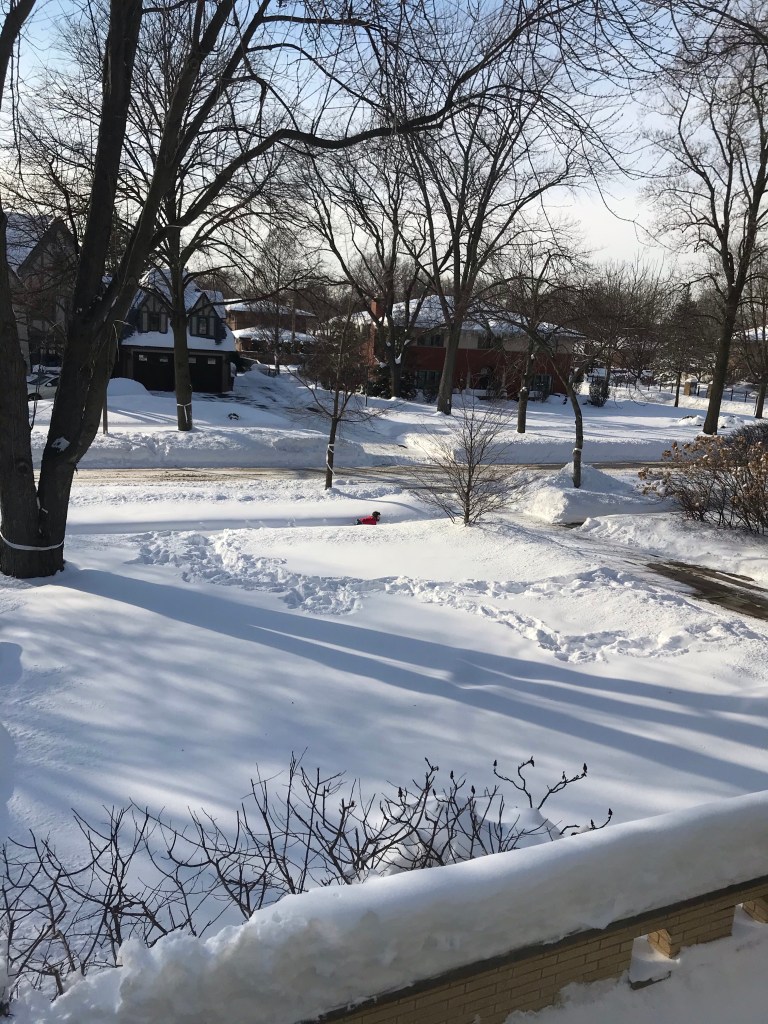
My assistant, who brought me the tools, taking the long way to the garage and crawling, for some reason.
In my last post, I pulled from Tantric texts and intellectually labored to describe a few of the formal practices that one can weave into a yoga practice to help make your life your practice and your practice your life, but it occurs to me that my experience today is a perfect example of the way Tantra works.
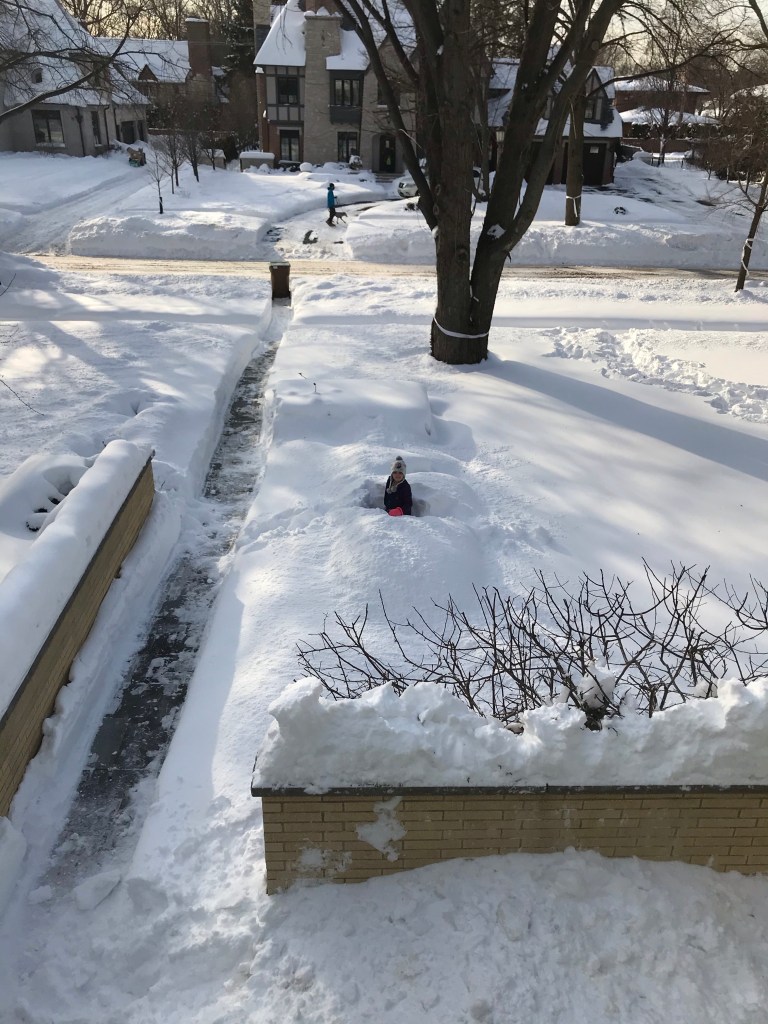
My other assistant, in a bush.
You do the practices and then they start to influence the way you write or do your job or parent, and those activities then become portals through which you re engage the practice so that one carries into the other until there is no difference between the two.
I’m feeling a lot of gratitude right now. Grateful for the moments of insight, grateful that you took the time to read this, and grateful even for the leaks in my house. 🙏
Yup, it’s coming in right there.
Live virtual vinyasa flow tomorrow @ 8 am central. Sign up through AhimsaYogaStudios.com
It happens fast. One moment, the tiny plastic skydiver is parachuting peacefully down from the second floor balcony, the next it’s getting shoved up someone’s nose. A retaliatory eye gouge that would horrify a Muay Thai pit fighter ensues, and suddenly, sobbing children are running out the front door in their underwear in five-degree-below-zero weather. And you? You’re standing on the porch, apoplectically threatening to cancel Christmas, which is still ten months away.
It’s no secret that kids are, shall we say, emotionally labile, and they are masters at infecting us with their insanity in ways that impair our ability to manifest our best selves. And in these pandemic conditions, with parents working from home (or not working from home) and kids doing school from home (or not doing school from home), we are not only trying to navigate the challenges of our occupations without the communities, equipment, peer groups, release valves, and support mechanisms on which we formerly depended, we’ve been thrust into a bizarro universe where we have to do things like try to convince a Farm and Fleet manager in Chippewa Falls that she should order an extra five-hundred units of dog chow while picking lightbulb shards out of a hyperventilating toddler’s foot.
By the time you get to your last Zoom meeting of the day, you may be in a state where you think you can cajole the head of the rail workers union into exempting you from a COVID surcharge that will force the closure of your Whitehall distribution center by playing “I’ve Been Working on the Railroad” and asking him where his belly button is. Yes, he may be a “big boy.” But do not ask him, “who’s a big boy?” You also must not remind him that “sharing is caring,” try to send him to time out, or withhold dessert if he does not comply.
A traditional method of studying the Hatha Yoga Pradipika
Even if you don’t have kids at home, you’ve surely gotten mixed up in similar fashion. The way we are cooped up and on top of each other (or isolated) all the time, it should be no surprise if you’ve inexplicably gone off on your partner or roomate or pet or fern or whatever. We’re still pretty stressed out, even if we’re sort used it by now.
If you’re reading this, you’ve probably already had some first hand experience with the ways that yoga can help you cope with stress, so I’m not going to travel down the rabbit hole of discussing the autonomic nervous system, increasing vagal tone, or speculate about the length of your telomeres.
What I am going to do is offer up a few tools from the Tantric tradition (the branch of yoga that teaches us to see the sacred in the mundane) that may help you train up your ability to shift gears quickly when the situation demands and take on challenges with your higher cognitive faculties intact. My intention is that you’ll be able to add these techniques into your existing asana practice, yoga teaching, or other regimes of training.
Here goes.
Kaya Sthairyam – kaya (body) + sthairyam (steadiness) Literally holding the body still. This is frequently taught as a seated practice, but the principles can be incorporated into even a vigorous movement practice. After a challenging posture, sequence, or set, put yourself into a hub pose and try to remain perfectly still. A hub pose is any symmetrical pose where you don’t have to use much concentration to maintain the asana. In studio classes, we are often encouraged to take child’s pose when the breath becomes ragged or we need a break, but the emphasis here is not merely on recovery. Instead, we are cultivating the ability to notice what is happening with the breath, the heartbeat, the energetic quality of the body, and the thoughts in the mind while in a state of arousal. If we can start to notice when these markers appear and practice not reacting to them (even at the level of fidgeting) we have a better chance when we are off the mat of stopping ourselves before we tip over into hyperarousal–and lose our minds or collapse into catatonic dissociation 😵. This practice can also help to cultivate pratyahara (turning the attention inward). As Swami Satyananda Saraswati points out in A Systematic Course in the Ancient Tantric Techniques of Yoga and Kriya, “After practising kaya sthairyam intensely for even a few minutes, you will find that the awareness spontaneously directs itself inwards.”1 Child’s pose is one example of a hub pose. Some others are tadasana (mountain pose), savasana (corpse pose), the passive variation of nakrasana (crocodile pose), and for practitioners who are very comfortable in it, adho mukha svanasana (downward-facing dog).
Kumbhaka – Breath Retention. According to the Hatha Yoga Pradipika, “When prana moves, chitta (the mental force) moves. When prana is without movement, chitta is without movement. By this (steadiness of prana) the yogi attains steadiness and should thus restrain the vayu (air).”2 Stopping the breath creates gaps in the mind, which can halt the inertia that carries thoughts and actions through their habitual patterns. By weaving these retentions into a physical practice, we can learn how to suspend our momentum and then restart it again on a clearer footing. Breath retentions can be of two types, antar kumbhaka (internal breath retentions) and bahir kumbhaka (external breath retentions). They are often practiced with the use of bandhas (energetic locks) and should only be performed once the breath is calm.
Pranayama – prana (inner breath) + ayama (to lengthen). Pranayama is one of the most effective and direct ways to explore and work with the energies of the body. It is well supported by yogic experience and a growing body of scientific literature3 that pranayama practices, when performed correctly, have salutary effects on the body and lead to more balanced, calm, and energized states of mind. Pranayama is most commonly thought of as a seated practice to be used after asana, before meditation, or on its own, but if we are willing to think of pranayama more liberally as extending the breath, we can also bring it into our asana practice. During breath-connected movements, see if you can make the inhalation or exhalation last longer than each movement. This can help you avoid the tendency to unconsciously accelerate in sequences like sun salutations or other repeated flows where you have to exert some effort. This practice of extending the breath can further be supported by thinking of each movement or static pose as a support for your breathing practice (rather than the other way around) and by noticing the brief pauses between inhalation and exhalation. If we can become adept at attending to the breath in this way during practice, it can trigger us to start using the breath to focus the mind and keep our energies within manageable bounds when stress arises in other contexts.
To learn to work safely and effectively with any of these practices, it’s best to find a teacher who can show you the way. Once you’ve had some competent instruction, you’ll have to experiment to find out exactly how they affect you and how to best employ them to receive your desired results.
I’d also like to add a caveat here: while I have experienced the described benefits of these subtle-body practices, I think it is easy to get lost in the weeds of trying manipulate your energies to fine tune your experience. Indeed, if you look through the classical texts like those mentioned above, you’ll discover that many of the practices can get pretty complicated and may start to feel esoteric or overreaching in their claims. Moreover, many of the recommendations for the application of some of these practices may not fit into your life in a way that will allow you to fulfill your worldly responsibilities.
For me, the greatest benefit of incorporating these techniques and their underlying principles into my practice has been the way they turn my attention inward, improve my tolerance for wide array of internal experiences, and help me work skillfully with different self states both on and off the mat. What’s more, engaging my interior landscape as a play of energies rather than as a narrative about what I think should be happening gives me a way to handle stressful situations that’s free of the baggage of my beliefs and theories, which gives me a better chance to avoid throwing fuel on the fire and reinforcing patterns of reactivity in me and my kids. Having trained in this way, I have at least a better chance of responding to changing circumstances in creative and intentional ways.
I hope you find some of these strategies useful. If you want to explore some of them with me, please join me for a class. I’m currently teaching a live virtual vinyasa class on Thursdays at 8 am central through Ahimsa Yoga Studios. You can always find an updated class schedule on my classes page, along with links to a few of my recorded classes on YouTube. From there you should be able to find more of my videos.
Thanks for stopping by. If you want to get the posts by email in order to stay up with new classes and other offerings, type your address in the box below👇 and click the blue button.
Processing…
Success! You're on the list.
Whoops! There was an error and we couldn't process your subscription. Please reload the page and try again.
1. Swami Satyananda Saraswati, A Systematic Course in the Ancient Tantric Techniques of Yoga and Kriya; p. 206; Yoga Publications Trust; Munger, Bihar, India; 2013 2. Swami Muktibodhanandanda; Hatha Yoga Pradipika; p. 150; Yoga Publications Trust; Munger, Bihar, India; 2014 3. PubMed.gov https://pubmed.ncbi.nlm.nih.gov/32669763/
Presenting 60 minutes of vinyasa yoga designed to give you relief from the aches and pains of desk work and help you build a toolkit of practices so you can work skillfully on your own with any body habits that may have developed from the years spent at your workstation. Practitioners who do a lot of sitting (in cars or on couches) or other forward-reaching task work (cooking, cleaning, toddler dominating 🤪, etc.) may also find this 👇 particularly helpful.
This is a level 1-2 class with no inversion. The pranayama following savasana uses the breath to help you learn to move between focused intentionality and relaxed awareness.
Please enjoy, and remember to practice within your limits. As with any physical activity, there is always some risk of injury. If you have any questions about whether any of these practices are right for you, please consult with your doctor first.
Want to stay up with future videos and other yoga content? Enter your email below to have the blog posts delivered to your inbox.
Processing…
Success! You're on the list.
Whoops! There was an error and we couldn't process your subscription. Please reload the page and try again.
The thing about fear though, is that we feel it in all sorts of situations, not just when we perceive a threat to our health or safety. We might feel it in anticipation of a confrontation with an angry boss. Or when we feel compelled to share an opinion in public. Or at the prospect of throwing a kid’s birthday party that won’t suck in the middle of winter in the middle of a pandemic. 🎉 ❄️ 😷 🤷♂️
For some of us, these sorts of fear-inducing situations generate a lot of behavior that might not serve our best interests. Just thinking about whatever is stressing us out can drive us to pound a bag of potato chips. Or disappear into the TV. Or hit the bong. Or maybe it’s more like we hit the bong then disappear into the TV while we pound a bag of potato chips.
Or maybe we engage in perfectionism, endlessly attending to the minutiae of some project, moving commas again and again, trying to control for every eventuality in the hopes that we’ll get some assurance about the outcome of our endeavors.
Or maybe we turn against ourselves. Tell ourselves we are piles of shit, that we are wasting our lives, that we don’t get anything right. Or maybe we lash out at our loved ones, our friends, our kids.
What did I do?
That energy, afterall, has to go somewhere.
But what if there was another way? What if we could develop the ability to stop avoiding and move directly into the confrontation.
“Whoa,” you say. “That doesn’t sound very yogic. What about Ahimsa, non harming? What about Santosha, the practice of contentment? What you’re saying sounds downright aggressive.”
Aggression, however, isn’t necessarily opposed to any of these values. As the philosopher Ken Wilber reminds us, “The etymology of aggression is ‘to move toward.’ Aggression itself is not bad or unhealthy. Aggression is not the same as hostility.”1
He uses a great example from nature to illustrate: “…if a stag is on its way to a salt lick, and there is a bramble-bush blocking its way, it will lower its head, flare its nostrils, stroke its hooves on the ground, and aggressively charge the bush, knocking it out of the way. The stag isn’t mad at the bush, it doesn’t hate the bush; it is simply mobilizing energy to remove a blockage.”1
Now I know that got you fired up. Me, too, but let’s take a moment here to remember that I’m not suggesting you headbutt your boss in the face, or that you loudly ridicule your friend’s husband at the church picnic for his unconscious bigotry, or decide that you are going to throw your kid a forty-person birthday bash in your living room where you spend your life savings to hire Katy Perry for fifteen minutes. No masks required!
Don’t do that. Don’t do any of that.
But if we are going to escape the limiting gravity of the small-self system and level-up our habits, priorities, and worldview–in other words, undergo the kind of transformation that a practice like yoga promises–we are going to need to summon great energy and find skillful ways to face up to our fears and aversions.
Forturnately for us, we are hardwired to do just that.
According to Stanford neuroscientist Andrew Huberman, when we move forward in the the face of adversity, it stimulates the release of the neuromodulator dopamine, which “suppresses the activity of the fear centers in the brain”2 and rewards us with a good feeling–a shot of energy, excitement, and the sense that we are on the right path. Furthermore, engaging the neural circuitry in this way “changes the structure of those circuits so that we’re more likely to engage in that behavior again. In part because it’s desirable, but in part because the circuit itself gets wired up in a way that it’s more likely to get triggered in the future.”
Huberman calls it, “the courage circuit.”
And the great thing is, you don’t have to start with the biggest, most frightening challenge you’d like to take on. You can start small and train up these circuits. If you can set your sights on limited, immediate goals that you know you can accomplish–it could be something trivial like waking up fifteen minutes earlier or making a cup of coffee or just taking five breaths in downward-facing dog at the beginning of your day–your brain will begin “coupling the neural circuits for focus with goal-directed behavior with the neural circuits for energy and agitation.”
In other words, engaging in regular, predictable, tractable practices (ideally first thing in the day when you want the dopamine system to be on the rise or at other times when you start to feel stressed) and then taking a moment to register that you’ve accomplished what you set out to do, can help you build energy towards taking on other more stressful challenges.
And if you don’t learn do this? According to Huberman, your brain will go searching for dopamine in other places, urging you to scroll through Instagram gathering “likes” or buzz around your house accomplishing tasks willy nilly, and you won’t create this coupling effect, which will leave you feeling discombobulated or maybe even strangely overworked before lunch. As Huberman points out, “we are always moving forward, but the question is, are we moving towards a focused, meaningful goal?”
But you don’t have to take Huberman’s word (or mine, for that matter). You can give it a try for yourself. Tonight before you go to bed, pick one or two small things that you are going to do in the morning, a few easy “wins.” It could be that you are going to go outside for a short walk. Or finish an email you’ve been putting off. Or maybe even do a short yoga practice before breakfast (some form of exercise amplifies the effects described above).
Whatever you set out to do, see if you can pick something that moves you, even if it’s only incrementally, in the direction of your longer-term aims. After you’ve accomplished it, even if it doesn’t go perfectly, allow yourself a moment to register that you did it. I bet if you can do this for a week, you’ll be pleasantly surprised by the results (and intrigued by the possibilities).
And a special note for the parents out there, especially those with small kids at home: you might have to figure out creative ways to chunk your efforts. For example, I built up, little by little, the habit of getting up early to do my asana, pranayama, and meditation practice before the kids get out of bed, but that doesn’t leave much time for writing, so I started working in pockets when my two-year-old was taking baths, naps, or in those rare moments where she was safely and contentedly occupied, like now.
Actually, I better go check on her.
Thanks for stopping by. As a reminder, I’m currently teaching a live virtual vinyasa class on Thursdays at 8 am central through Ahimsa Yoga Studios (you can always find my current schedule on my class page as well as links to recorded classes on YouTube.)
Another way to stay current with my class offerings and other yoga content is to subscribe to get the blog posts by email. 👇
Processing…
Success! You're on the list.
Whoops! There was an error and we couldn't process your subscription. Please reload the page and try again.
✌️ ❤️ 🕉 💪 🙏
Wilber, Ken; The Religion of Tomorrow; p. 259; Boulder, Co.; Shambhala Publications, Inc.; 2017
I pulled these Huberman quotes from various YouTube videos. I was careful to transcribe what he said correctly, but not careful about keeping track of which quote came from which video, and it’s not worth tracking them all down according my duration-path-outcome analysis. Let me know if I misquoted (or misrepresented) anything you find here. If you’re interested in hearing more about how to use neuroscientific principles to optimize your sleep and other life practices, check out the Huberman Lab Podcast.
Whaddya waitin’ for? Go get your mat. ✊ ❤️ 🧘♂️ 🕉 🙏
Want to get the posts by email? Enter your address below. No spam, email addresses are only used to send posts, and there’s an unsubscribe link in everyone.
Processing…
Success! You're on the list.
Whoops! There was an error and we couldn't process your subscription. Please reload the page and try again.










 suburbanyogadad.com