Props to the Parents of the Pandemic

Last night while I was backing out of my driveway to take my two older kids to an outdoor playdate in a snowstorm, I clipped the front corner of our minivan on the stanchion for the basketball hoop.

Then this morning, I woke the kids up late for school, somehow simultaneously burnt AND undercooked the oatmeal, and generally acted like a stressed-out spaz in a five-alarm attempt to get the kids to school before the 8:30 bell. I felt a little like this guy.

Alexander and the Terrible, Horrible, No Good, Very Bad Day by Judith  Viorst, Ray Cruz, Paperback | Barnes & Noble®

We made it to school on time. The Lord God in Heaven on High will attest to the fact that we made it with one minute to spare.

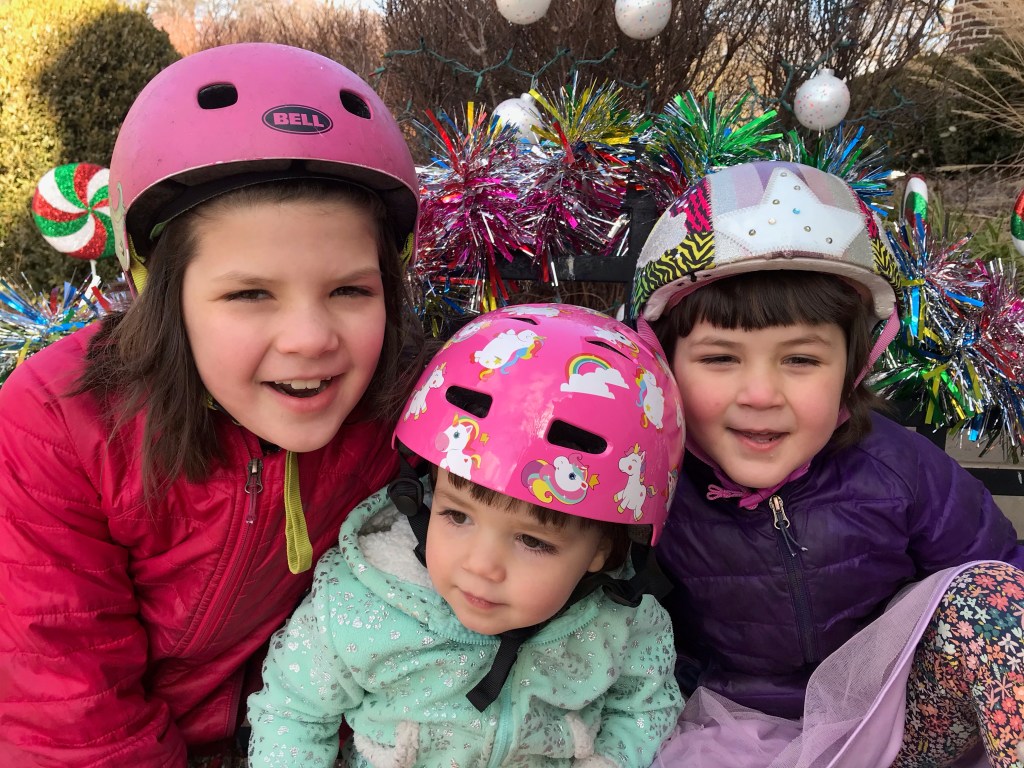
Not really sure what I was trying to protect or what the cost would’ve been if they’d been a few minutes late, but the whole thing made me think about all of you out there, and so I wanted to send a shout out to all the parents who are slinging it in this pandemic.

This goes out to all of you trying to get your kids to school for hybrid models of blended in-person learning with a foot of snow on the ground while carting two-year old siblings whose floppy little ears keep folding under the tension from the face-mask straps.

This goes out to everyone trying to peel f*cking cucumbers while resetting wireless routers and hunting for tiny Ziploc bags of paint that came home in the supply sacs that you picked up from the closed school so your kid can do prerecorded craft projects on Seesaw.

This goes out to all of you living in mortal fear that your kid is going to bust in on you in the bathroom (again) with an iPad in hand and a math Zoom session going.

This goes out to all of you trying to do your job (or who lost the job you need) to pay the bills and fulfill your calling from home or offices or hospitals or grocery stores or the driver’s seat of an effing public bus where some jackwad gets aboard with his facemask pulled down under his nose and sneezes right in your face only to come home to find your spouse too wiped out to cook or to find out that the babysitter just tested positive for COVID-19 or to learn that someone you know and love just died.

This goes out to everyone waking up in the middle of the night full of rage that they can’t account for, to everyone who has recently flipped over a coffee table (did I do that?) or started weeping uncontrollably for no apparent reason without being able to recall how much stress we are all under because it’s been there for so… long… now…

I just want to say. I see you, I love you, and most importantly, you got this.

In fact, you are crushing it. Even on those days when you drive into basketball hoops or somehow manage to get out of the house wearing only one sock or threaten your child that if she does that thing one more time you will never let her eat again.

Yeah, you said it. Your other kids heard you.

Despite all of that, I swear that not only have you got this, you have not yet begun to tap into your innate reservoir of resilience, and at the most fundamental level, you are always whole, healthy, pristine, and safe.

For me to hold it together, it’s paramount to get a taste of that fundamental experience on a daily basis through my meditation practice, yoga nidra, and my physical practice of yoga asana. But whatever it is for you that grounds you, I hope you’re keeping up with it, and if you’re looking for further resources or just more encouragement, leave a comment below and I’ll get back to you, or maybe ask your teacher, or try out something new that might serve you. Hey, maybe it’s my live virtual Thursday morning vinyasa yoga class through Ahimsa Yoga Studio. Wait, that’s tomorrow! 8 am central. 🧘‍♂️

In the meantime, let’s take care of each other, forgive ourselves where we can, and dare to be bold in the face of adversity as we jump through these hoops (or crash into the poles holding them up).

✊ ❤️ 💪 🕉 🙌

Want the posts by mail? 👇
Processing…
Success! You're on the list.

Bear Yoga

Check out this hour-long vinyasa-style yoga class with a focus on the movement known as the bear. 🧸

The bear is a form of quadrupedal locomotion, or walking on hands and feet, where we keep our bodies in a down-dog shape as we move about.

In addition to being super fun, the bear is a great way to increase shoulder strength, improve thoracic mobility, stretch the back of the legs, and develop power in the deep core, all of which can lead to greater stability on and off the mat. We’re going to go through four variations of the bear with a little time to play and explore the variations on your own.

Most of this class will feel like a regular yoga class with familiar postures and an emphasis on breathing and moment-to-moment attention to your ongoing experience. We will wrap up at the end with a few rounds of kapalabhati for pranayama followed by an open awareness exercise for meditation. 🧘‍♂️

You won’t need any props, but if you like blocks or a strap to use in your practice, feel free to grab those now and meet me on the mat, and as always, go at your own pace, take breaks when needed, and please remember to favor the quality of your movement and breath over trying keep up or forcing yourself into anything. 🐻 💪 ❤️ 🕉 🙏

Want to get the posts by email? Enter your address below. No spam and there is an unsubscribe link in every post.

Processing…
Success! You're on the list.

End Screens, Teaser Texts, and Self-Promotion. Oh my.

I’ve created three new videos. I had the idea to make some classes that can be used in a modular fashion, so instead of one long video that contains asana followed by pranayama and then meditation, I’ve broken it up into three videos with end cards that link them so you can go from one to the other.

This way if you want to do a guided meditation or pranayama after asana you can click on the next video or you can do the practices in standalone fashion. I hope in the future to be able to add some more similar offerings so practitioners can mix and match.

It’s nothing revolutionary, and the transitions aren’t seamless, but I know not everyone always wants to do a yoga class that involves the subtler practices and sometimes people ONLY want to do the subtler practices. I also know that when a video looks too long, it can be a turnoff. For my part, I often feel like I have time for a 45-minute video but not a 75-minute video, even though I, more often than not, end up spending at least a half hour after a 45-minute asana practice doing breathwork and seated meditation.

It’s funny to compare what we think we have time for with what we actually do.

I’m still working out the bugs. I’ve resolved some of the lighting and sound issues, but because I recorded these with my computer camera rather than my phone, they’re all in standard definition which means you won’t be able to fully appreciate my manly chin. 🙄

It’s pretty amazing how many tools there are to create and share videos, and learning to skillfully apply those tools is an art. I find it challenging to make something that others will be able to find, enjoy, and benefit from without getting sucked into compulsively trying to gather likes, views, subscribers, friends, fans, students, whatever. It’s a strange dance to teach yoga within the structure of the marketplace. I do my best to share what I’m learning without curating my personality in order to convince you that I’m this or that or even a someone, but at a certain level it’s unavoidable, and I suppose we all have to make peace with our mixed motivations if we’re going to interact with others at all.

So having said that, here’s a way to subscribe to the blog. There’s no spam, your email will only be used to send out these posts, and every emailed post has an unsubscribe link at the bottom so you can opt out at anytime.

Processing…
Success! You're on the list.

New Year, New-ish Yoga Class

After our child-care situation blew up 🤯 I halted work on most other fronts. I didn’t think I would have anything left in the tank after spending all day everyday with three small kids and two remote learning schedules. We could barely keep up with the added family workload brought on by the pandemic before our au pair left, so the idea that I would have time or energy to make yoga videos and write blog posts seemed nuts.

For the record, I am not keeping up with the cleaning or the cooking in any model fashion, and the only reason the kids have survived all this is because they are helping me.

That is to say, I don’t want to make it sound like I’ve mastered our domestic situation to the point where I’m going to start pumping out blog posts and new yoga videos along with amazing original fiction and stunning works of art. Odds are that tomorrow night I’ll probably be sulkily washing down a block of cheese with beer and watching NBA stars talk about their bad experiences trash talking Michael Jordan.

But for now, here is a yoga video I recorded a while ago and never finished editing.

This vinyasa class is a little over an hour long and focuses on variations of Uddiyana Bandha (abdominal retraction lock) and Bahir Kumbaka (external breath retention). Uddiyana Bandha has energizing effect that tends to–when combined with the mind-stopping effect of the external breath retentions–generate a feeling of calm uplift. The video starts off a little dark before the sunrise, so please excuse the lighting. Enjoy the cameos from our cat, Willis. R.I.P. 🐱 😇

I hope you find this video useful and enjoyable. To stay current with any future content I manage to eke out, SUBSCRIBE to my YouTube channel and/or add your address below to get the blog posts by email.

Processing…
Success! You're on the list.

✌️💚 🕉 ✊

Adaptations of the Stay-at-Home Yogi

We’re playing in the fairy garden.

Yeah, I’m here too.

It’s week four, I think, of the full-time stay-at-home yogi experiment. Actually I’m also a part-time e-learning facilitator which includes some outdoor pod management. None of these jobs pay anything, but they sound official as hell. Benefits include control over the individual bags of pirate booty and having my kids yell, “You don’t understand!” every time I try to help them with their writing.

It is for sure true that I do not understand.

I don’t understand how we got into this strange situation with the pandemic, and I don’t understand when or even how it’s going to end. A vaccine? Herd immunity? Maybe we are just shifting into a new way of being.

Now we’re trying to recreate our lives for another season. The weather is shifting fast. It became Fall all at once last week. The outdoor class I taught in the big shade of the tree should have been moved to the sunny side of the field, but I couldn’t adapt fast enough realize that in time, and by the end of class my feet were freezing and I’m guessing the feet of the nine brave souls who came out to practice with me were also freezing. Sorry about that peeps. I’ll try to adapt faster, more completely, smarter next time. So many changes.

Sometimes I wonder if this pandemic experience is increasing the plasticity of our brains. It could be we’re being forced to adapt in ways that will have profound neurological effects. Perhaps we’ll discover in thirty or forty years that almost no one who lived through the pandemic will develop Alzheimer’s.

Of course, it could also be true that all the anxiety we’re enduring day-to-day could be supercharging our amygdalae, the part of our brains that controls our fight-or-flight response, creating a more neurotic baseline state that will persist long after we are worried about this disease so we’ll just be more worried about everything else all of the time and even more afraid of each other.

I for sure do not understand.

And I wish I were better at running on the hamster wheel of cleaning and cooking and backyard tag and e-learning and waking up in the middle of the night with the kids’ bad dreams and not being able to go back to sleep because of some strange energy in my body. Did I used to sleep better for the pandemic? I don’t know.

But the practice helps. The movement gives me confidence that I can handle what arises and the energy I need for my kids. The seated meditation helps me down regulate my nervous system and helps me see that my beliefs about how things should be, how I should be, are provisional a best. And at night when I’m lying awake, I can put a headphone in one ear and listen to a yoga nidra practice which usually helps me fall asleep. The practice helps with all of these things, but it doesn’t help me understand.

This morning, while the kids are zooming, I’ll try to do some more work to do to optimize the garage for pods. I’ve had visions of turning it into an incredible e-learning space. Heaters on the ceiling. Christmas lights strung all over. Art stations, a snack bar, artificial turf on the floor that glistens like a mini golf putting green with tables set up at the appropriate social distance, of course, but most of that probably won’t happen. No matter what I do, it’s soon going to be too cold for the kids to be out there with the big door open for ventilation, and it looks like we’re going back to school anyway, at least part time. Once again we’ll be starting something new, back on the steep part of the learning curve, trying to adapt.

I hope the net effect of this experience is that we will become more malleable and resilient, that we’ll develop new ways of living that strengthen the immediate communities of our families and neighborhoods and maybe reduce our tendency to constantly run out after the next vacation, high-priced experience, or other diversion.

And wouldn’t it be amazing if, in the absence of our usual network of distractions, more of us turned inward because we finally started to realize that our way of relating to our experiences determines how we feel about our lives even more than the content of those experiences? That is one thing I’ve come to understand. It’s been the great gift of the practice, and yet I still forget. Everyday I forget. I live most of my life forgetting who I really am and getting caught up the roles that I play.

Father. Yogi. Writer. Neighbor. Husband. Son. Friend. Artist. Short-order cook. Storyteller. Household manager. Teacher. Sentient being dealing with the fear of death.

I for sure do not understand.

But we have the practice. The practice is there for anyone who wants it. It’s so simple. Practice watching your experience until you notice that you are not your thoughts. Then do it again and again and again. Little by little, we end up believing our thoughts less often, and as a result, there is less suffering, more space, and we spend more time in our natural state where happiness arises. From there, it’s much easier to admit that we don’t understand and sometimes even feel ok with that.

Vinyasa Yoga tomorrow at the corner of Adams and Lombard in Oak Park. 8:30 am. Sign up on the Ahimsa website or just show up a little early and I’ll sign you up on my phone. Weather is supposed to be nice, and I promise not to set us up in the shade. 😉💙💪🕉🙏

3 New Online Classes

Hey Everybody. I made a few new videos for the first time in awhile. Here are links to a 45 minute moderate early-morning vinyasa class, a 45 minute gentle morning movement class, and a 1 hour vigorous vinyasa class featuring functional mobility work and animal movement.

I hope you and enjoy and don’t forget to click the SUBSCRIBE button on YouTube to get updates when I post new vids. It will also help improve the channel! 🙏 💪🕉✌️

Meeting Old Practices on New Terrain

I just finished Adyashanti’s The 30-Day Wake Up Challenge. I know. I know. The title… 😬But let me explain…

Pin on Spiritual Awakening
“The whole world is waiting on you, depending on you, on each one of us to awaken to our shared reality and to live it as clearly and honestly and humbly as possible.” –Adyashanti

I picked up this audiobook through Audible.com (I don’t know if it’s available elsewhere). I like Adyashanti’s books (Adyashanti means primordial peace). In particular, Resurrecting Jesus and Spontaneous Awakening each had a big impact on me, so I was eventually able to overcome my aversion to the title of this one, which I find too evocative of another wellness gimmick making overreaching marketing claims.

Wake up, B!

For each day of the 30 days there’s a talk which is usually followed by a short meditation practice that you are meant to return to again and again throughout the day.

The first week of the program focuses on what Adyashanti calls “awakened awareness,” and the meditation practices work with the mind and the area of the head (the area from which most of us have been acculturated to live most of the time).

The second week of the program deals with the “awakened heart,” and the practices focus on love and compassion and are often entered into through the spacious region of the chest.

The third week of the program focuses on the “awakened ground of being,” and the meditations intend to ease the practitioner into the depths where the conditional aspects of our being start to fall away. The somatic focus of this section is on the belly below the navel–what people familiar with Zen practice will recognize as the hara.

The fourth and final week of the talks are geared toward “embodied awakening,” in which Adyashanti offers challenges that are usually interpersonal in nature. These talks aim to bring our awakening into our relationships and the rest of our lives. This can include “leading with the heart” each time you encounter someone, “pivoting toward peace” when you you feel yourself heading down a different path, “seeking to understand” where someone is at before you make them try to understand where you are, and seemingly simple (but nearly impossible) practices like, “be totally honest with yourself and others for one day.” In this last 9 days of the program, there’s often no guided meditation.

I used the structure of the program and my curiosity about the topics to help get me onto the cushion (or more usually, the rocking chair in the backyard) each morning. Most days I woke up, sucked back an espresso, and went outside with the baby monitor and my headphones, eager to hear what was next. I would listen to the talk through one headphone, do the guided meditation, and then sit in silence for as long as I felt like it or until I started to hear, “Dadadadadada, daddyyyyyy…” through my other ear.

I’d like to tell you that I was up sharply at 5:30 and sat for a long time everyday, but it isn’t true. I missed a few mornings and often ended up circling back in the afternoon or evening when I had time. Some days I only got through listening to the ten minutes of audio, and other days I didn’t get to it at all (in truth, it was probably more like a 36-day wake up challenge for me 🤫 ). Most days I would listen to the talk a second time as I went to bed. More often than not, I’d fall asleep to Adyashanti’s voice before the short audio ended.

I didn’t love all of the talks. Some of the themes and practices within each section were too similar to others to feel distinct, and I often wanted more theoretical rigor or grounding in tradition. I also didn’t grock some of the practices in the final section, mostly because I couldn’t always feel my way into the practices. For example, on the day I worked on “pivoting towards peace,” I could perceive an identifiable internal shift each time it happened, but on the day where the instruction was to be totally honest with yourself and others, the practice felt flat, like another piece of “good advice, that you just can’t take,” (is that really irony, Alanis?).

Having said all that, I thought the audiobook was great. It helped me reinstate the habit of sitting first thing in the morning–something I did with zeal before our kids became multiple. Before kids I would get up everyday and sit for forty-five minutes or an hour in full lotus atop my zafu with incense and the whole deal. I’m not sure that practice didn’t come with some hidden costs, but my day definitely goes better when I do at least a little sitting first thing (even if it is in the rocking chair).

I think anyone looking for some guidance or a fresh approach to their sitting practice could benefit from this audiobook. I also think that if you’re beginning to feel like your practice isn’t helping you cultivate greater wisdom, compassion, or ability to see yourself as inextricably woven into the fabric of reality, this program could help you tap into what might be missing from your own practice (or what you might not have properly understood within your particular tradition). You might also find that if you’ve gotten really good at meditating but you’re still being a self righteous dingus or a selfish, suspicious a*hole more than you’d like and don’t know how to work on it, these talks and practices can give you a new approach to bring your realization out into the world.

Wherever you are in time and space, I hope your practice is going great (even if it’s hard and messy and deeply uncomfortable at times) and that it’s serving both your transcendental unfolding AND your day-to-day life in the conditioned world. As always, feel free to leave your thoughts or some other good reads/listens in the comments, and take heart! As Adyashanti reminds us, waking up is not only for the “rare or the few;” it’s for everyone and it might even be a lot closer than you think. 😉

🤟 🕉 🙏 💜

Three Parenting Books

Have your attitudes about parenting changed during the pandemic? Mine have. I’ve been spending way more time with my kids. Way more unstructured time, and I’ve realized that a lot of the facets and aspects of parenting I’ve been avoiding–albeit mostly unconsciously–have been things I’m actually missing out on.

I share a lot of my energy with the kids. I always have, but until recently, it’s never really occurred to me to think of being a dad as a practice in the same way I think about my yoga asana practice or my meditation practice or my writing practice. My approach has been to just show up and do it in the way that seems best, not really seeking out advice or strategies to up my game.

But I’m starting to see things differently–starting to see the (now) obvious truth that my relationship with my kids is a major, if not primary, vehicle of my growth and transformation. My explicitly creative and spiritual practices have their part to play, too, of course, as do all the other experiences and endeavors that don’t fit into any of those cute, well-defined rubrics, but I already knew all that. 😁

One outcome of this shift in my thinking is that I’ve become more motivated to learn, and to that end, I’ve found a trio of pretty great books that have, in a short time, helped me noticeably improve my relationships with my children and create more harmonious home.

The Conscious Parent, by Shefali Tsabary.

The Conscious Parent: Transforming Ourselves, Empowering Our ...

The main thrust of this book is to help you develop a perspective from which you see you and your kid as two beings on a co-evolutionary journey with a responsibility to teach and learn from one another. It’s a premise I had no trouble accepting, even though in practice I’ve tended to parent as if I were sending edicts and wisdom down from the mountaintop. This book isn’t full of practical advice or strategies but rather uses anecdotes to explore the ways in which we can learn to identify our personal baggage as such and minimize the effect of unconscious habits and programming that interfere in our relationships with our kids.

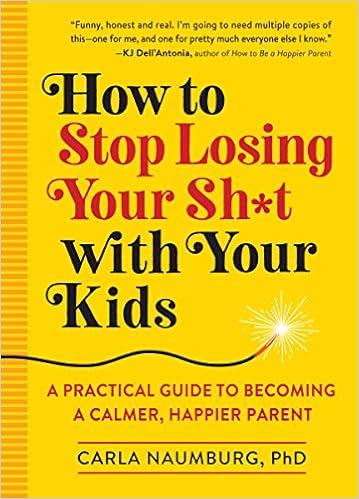
2. How to Stop Losing Your Sh*t with Your Kids, by Carla Naumburg

This book is full of practical advice and strategies based on the author’s experience, neurobiology, and developmental psychology to help learn to keep your cool. 😎 The tone is what you’d expect from the title and may not appeal to everyone, but I liked the conspiratorial, laid-back discourse and found it funny and candid without being glib.

A lot of the advice feels commonsensical (protect your sleep), but backed up with the science to explain why (if you’re sleep deprived, your prefrontal cortex goes offline and your limbic system takes over 🤓 ), I felt more motivated to put some of it into practice. Just learning a little bit about what happens to your neurons each time you lose your sh*t–not to mention what it does to your kid’s wiring–makes this worth the read. One invaluable thing I picked up from this book is learning how to recognize, in the moment, when I’m ramping up en route to a blow up. If you can see it’s happening, you can make a choice, and the author gives you lots of alternatives to help you avoid taking the nuclear option.

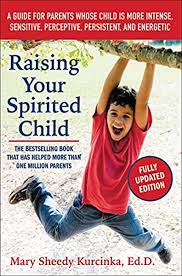
3. Raising Your Spirited Child, by Mary Sheedy Kurcinka.

Amazon.com: Raising Your Spirited Child, Third Edition: A Guide ...

My wife bought (and read) this book when we only had one child. I should have read it then.

Per the cover, the book is supposed to be for parents of kids who are more intense and/or sensitive than other kids, and while my kids each fit the description in their own ways, I should say I’m grateful not to have endured some of the more extreme and even bizarre stories shared by some of the parents in the author’s support group.😬

Having said that, even if you don’t think of your kid as being particularly “spirited,” this book has a lot of great information to help you relate to kids (all people, really) with different temperaments and emotional-processing styles. It can also help you help your kids learn to self regulate and is full of useful strategies to create a mutually supportive and nurturing family culture.

I’m probably going to listen to these books again and might share some of the more helpful info in future posts, but for now, here are some things you can do, according to Mary Sheedy Kurcinka, to turn your family into a “problem-solving family.”

  1. If you hit a roadblock, back off. Give everyone a chance to unlock.
  2. Seek understanding of why this issue is important to your child.
  3. Explain what is important to you.
  4. Solve the problem together. Invite your child to brainstorm potential solutions that work for both of you.

I hope you find some of these books useful. If you have any thoughts on them or other titles you think I might like, please share them in the comments. ✊ ❤️ 🙏 🕉 🤙

Special As Nobody

I’ve been practicing Hatha yoga on a daily basis now for almost twelve years, teaching it for five, and to tell the truth, I feel like I’m just learning to give the practice its proper regard.

When I first began practicing daily in 2008, I thought of Hatha yoga as a way to get some physical exercise that would support my main practice, Zen Buddhism. With its emphasis on rigorous seated meditation, its anti-metaphysical metaphysics, and its style of assaulting, head on, the great matter of life and death, Zen seemed to be much more serious than Hatha yoga, which is often considered, even by it’s practitioners, a preliminary practice to the subtler aspects of Raja yoga.

I felt much as Ram Dass must have when he reflected on a period in his own Bhakti (devotional) chanting practice. “I wanted to meditate,” he said, “All the big boys meditated. Everyone else just sang.” Except in my case it was, everyone else just stretched.

I no longer practice Zen. It’s been years since I powered through an intense sesshin, sat across from a roshi to do koan work, or even entered a zendo, yet I still have a certain predilection for the approach.

In some respects, I still find it more direct to sit right down and work with the mind than to manipulate the gross and subtle bodies through intricate postures, breathwork, and concentration techniques in order to spontaneously experience true nature. What’s more, there is nothing, in my experience, like sitting in stillness without doing anything at all to help me open into that perspective whereby I recognize myself as a witness to my thoughts instead of mistaking myself for the thinker of those thoughts. I’ve yet to discover anything more effective to help me see, again and again, why it’s sheer folly to believe the ideas and models that my brain is ceaselessly concocting.

Yet even though the bare-knuckle sitting approach can be a tremendous aid to remind me of the egoic predicament, even though it helps me perceive, at times, my inherent union with the entire Kosmos, to taste form as emptiness and emptiness as form, it’s also true that a vigorous vinyasa yoga practice usually has a greater effect, day to day, in helping me stay patient with my kids, feel contentment in my life, and get on with my other work than almost any amount of sitting.

Maybe I need to sit more

I once asked one of my yoga teachers, Jim Bennitt, what Tantra is, and he told me, “From what I’ve been taught (and agree with) as long as the practices are making you a better father, husband, teacher, etc., etc., you are on the right track. Don’t let the techniques draw you away from your worldly responsibilities. That’s Tantra to me. Making EVERY aspect of your life better.”

That answer blew my mind. Here I was, over a decade into dedicated spiritual practice, and I had never really thought about making that my primary index for assessing the efficacy of what I’d been doing. Certainly at the outset of my seeking, I wouldn’t have even been able to hear such an answer. I didn’t want anything practical. I wanted something sophisticated, esoteric, transcendent of the mundane shit I was tired of slogging around in.

I’m still learning to see aspects of the vanity, escapism, and spiritual materialism that have hallmarked much of my approach to Hatha yoga and spiritual work in general, but that’s not to say I have regrets. It’s all just part of my path, and as I recently read on Twitter, “if you can’t see what an idiot you were ten years ago, you’re probably still an idiot.”

In some ways, it may sound trite to issue a reminder that spiritual practice should make your daily life run more smoothly, especially in the current climate where yoga and mindfulness have been co-opted by the wellness craze with it’s insatiable desire for optimal physical health, emotional resilience, increased productivity, yada, yada, yada… but I think those of us who have been practicing over a long period of time with the primary aim of fully awakening are still likely to occasionally lose sight of these more down-to-earth concerns and get caught up in a kind of transcendental elitism.

It doesn’t matter if it’s the subtle sounds you may hear in savasana, visions of Christ or the Buddha that might flash across the back of your eyelids when you sit in contemplation, or the direct knowledge that your body, mind, and all of existence are actually inside you, these experiences can easily become just one more way to reinforce the illusion of separateness.

Don’t get me wrong. It’s all great. The visions, the sounds, going deep, deep, deep to where it all dissolves. Yet it seems necessary to keep in mind that we each have to do our unique dharmic dance with as much beauty, wisdom, and compassion as we can muster on every plane of reality, not just those rarefied spheres that might seem to set us apart.

So in that spirit, I’d like to invite you to join me tomorrow, Friday, 5/22, for a free vinyasa yoga class.  The class will be LIVE on Ahimsa Yoga Studio’s Facebook page at 10 am central.  Here’s the link:

https://www.facebook.com/ahimsafamily/

If you can’t be there LIVE, check the page later to do the class at your convenience. It will be archived on the page along with other classes led by me and the many amazing teachers at Ahimsa.

Monkey Movement Yoga

Teaching tomorrow, Friday 5/15, LIVE on Facebook. 10 am central. 75 minutes. All levels. No charge.

👉https://m.facebook.com/ahimsafamily/

We’re going to focus on the movement pattern known as the monkey. 🐒 Not only is it fun, it’s is a great way to build mobility in the hips and thoracic spine.

If you can’t make it LIVE, follow the link later to find the class archived along with other classes led by me and the outstanding beings at Ahimsa. Also, I’ll be teaching the remaining Fridays in May at the same time and place. #ahimsafamily ✊🙏❤️🕉